
DCFR Insight 10 / Feasibility Reports
Planning-Grade Data Center Feasibility Reports: Scope, Evidence, and Decisions
A useful feasibility report converts assumptions into measurable site-fit outputs, evidence-ranked risks, decision gates, and a disciplined handoff to utilities, authorities, consultants, and acquisition teams.

The report must help someone decide
A feasibility report is not valuable because it contains many pages. It is valuable because it allows a buyer, developer, broker, investor, or utility-facing team to understand what is plausible, what is constrained, what is unknown, and what action should occur next. Every section should connect evidence to a decision.
Separate five classes of information
The report should distinguish client inputs, externally observed facts, rule-based planning assumptions, calculated outputs, and confirmation-required items. Mixing these categories creates false confidence. A value entered by the client is not the same as a utility commitment; a map observation is not a survey; and a calculated building block is not final engineering.
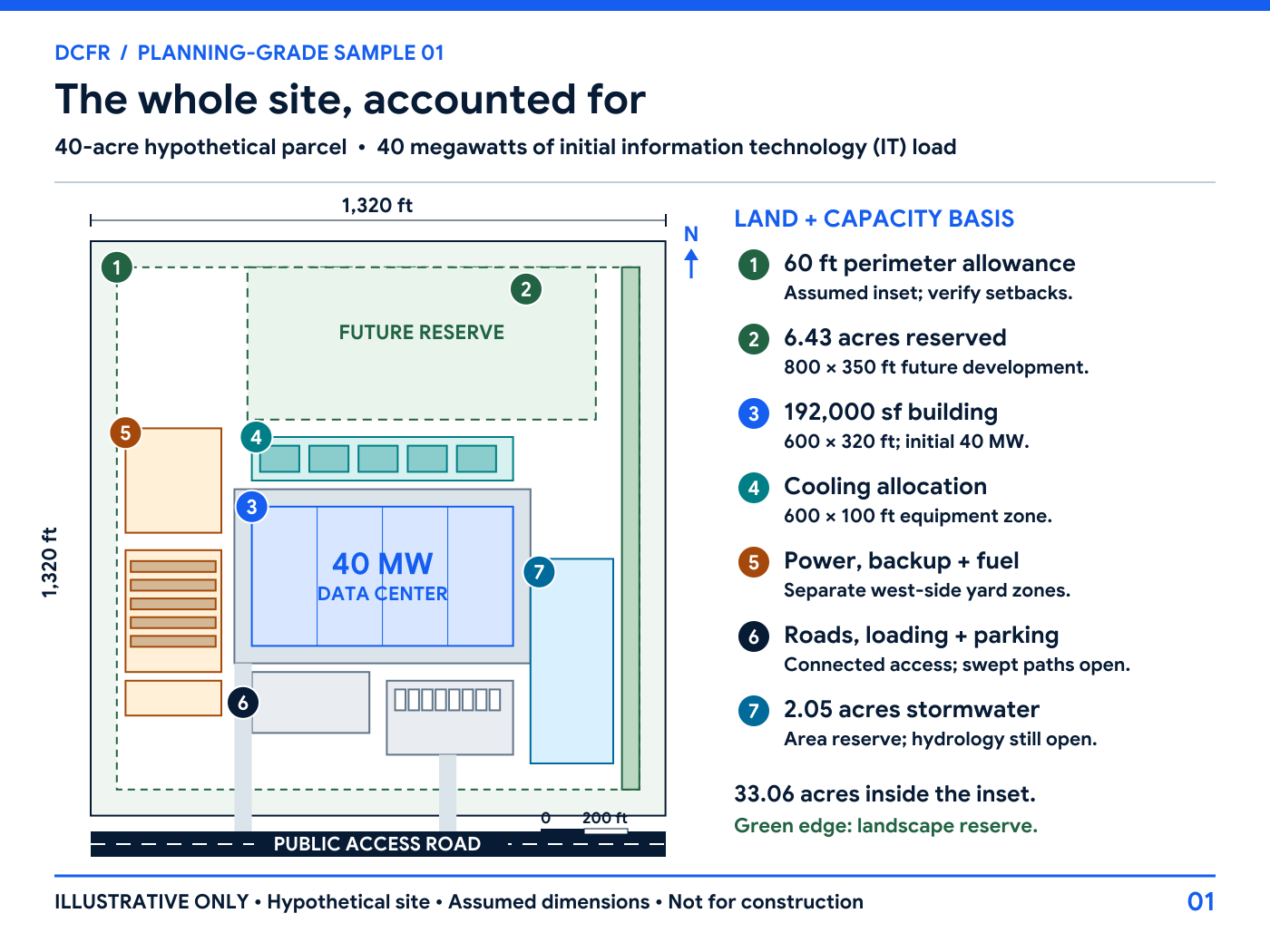
Show the buildable envelope and the full land budget
The report should reconcile gross parcel area with setbacks, easements, environmental constraints, grading risk, buffers, and other no-build zones. It should then allocate the building, electrical and generator yards, cooling, fuel, water, access, parking, loading, fire routes, stormwater, construction, and expansion. The output should be dimensioned and traceable to quantity drivers.
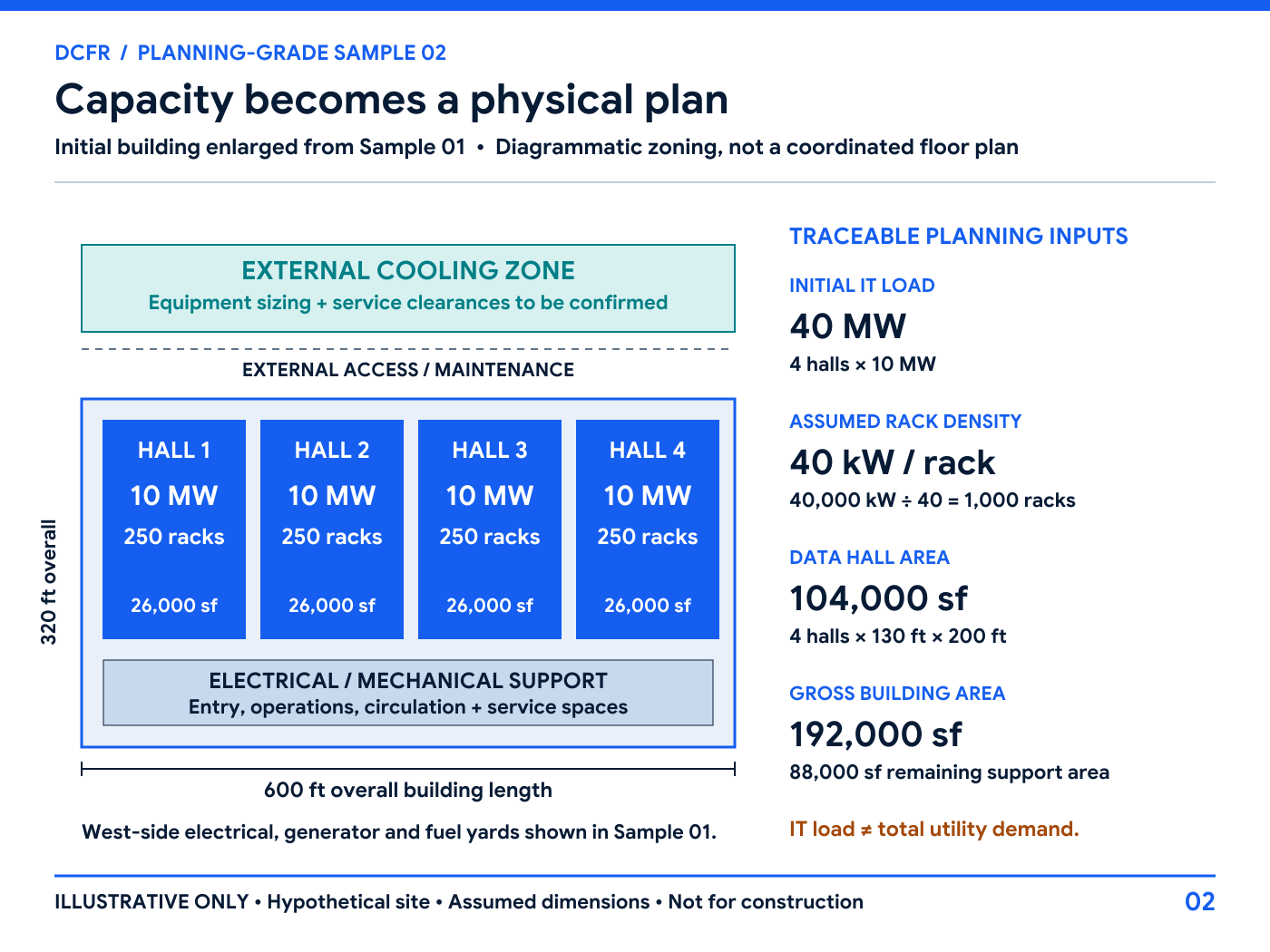
Translate capacity into a repeatable geometry basis
Document IT load, rack density, estimated rack count, module size, module count, gross-up basis, selected building archetype, and approximate footprint. This prevents a site plan from becoming a decorative diagram and allows reviewers to challenge assumptions constructively.
Treat utility, entitlement, and civil risk as parallel workstreams
Power, zoning, code, fire, water, sewer, environmental, access, grading, stormwater, acoustics, and community exposure should each have a current evidence level, key unknowns, responsible confirmer, schedule consequence, and next action. A generic red-yellow-green score is insufficient unless the reason and closure path are visible.
Include alternatives, not only one preferred scenario
A strong report compares at least a base case with one or more meaningful alternatives: lower or higher density, different cooling strategy, alternate yard orientation, phased building plan, mitigation-heavy sensitive-edge plan, or different utility route. Alternatives reveal whether the site is resilient or viable only under one fragile assumption.
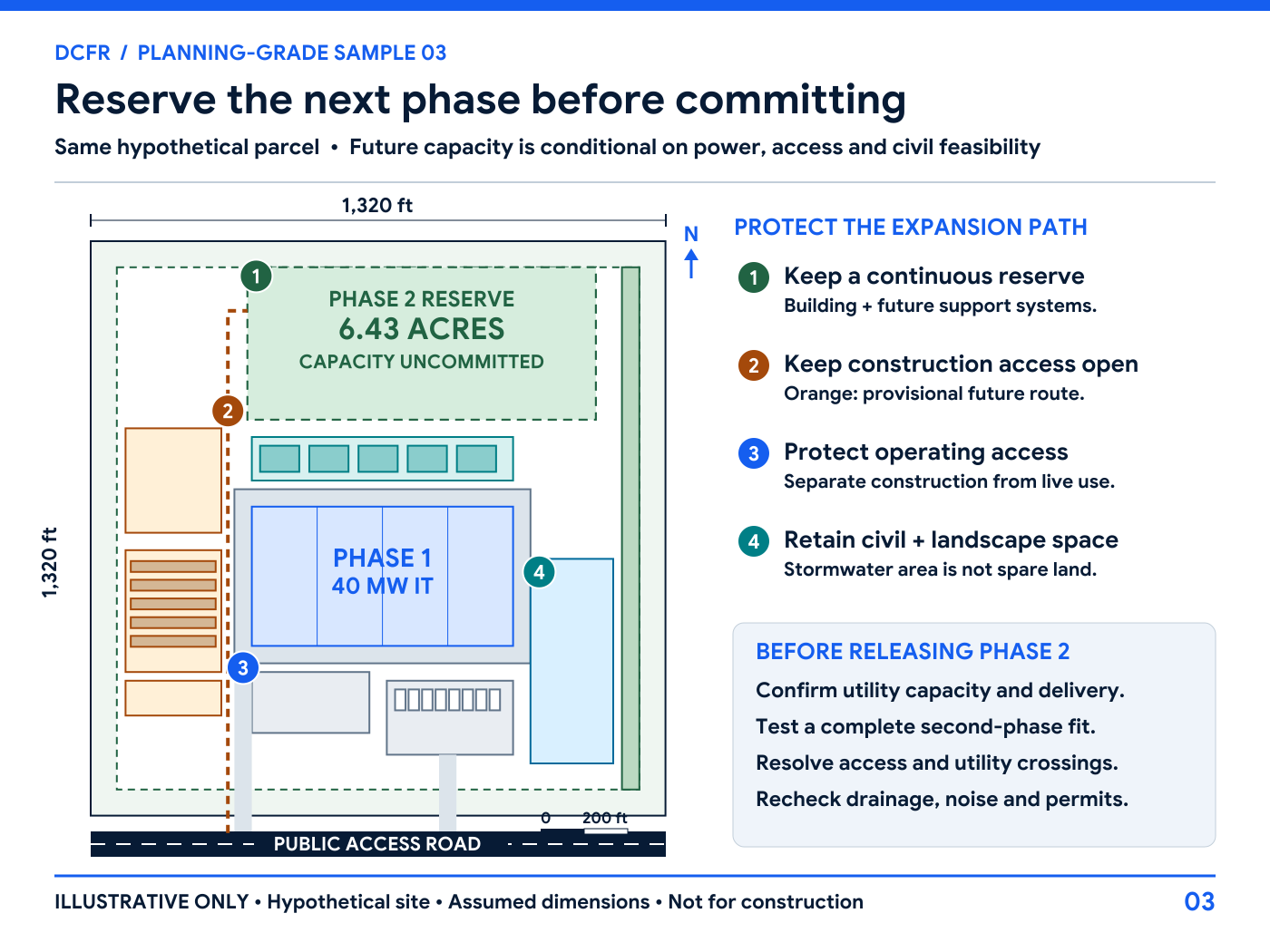
State the decision and the conditions attached to it
The executive conclusion should say advance, advance with conditions, hold, or reject. Conditions should be specific: obtain a utility study result; confirm a zoning interpretation; secure an easement; complete acoustic modeling; verify stormwater outfall; or reduce the program. The report should also state the commercial consequence if the condition is not met.
Provide a consultant handoff that reduces rework
The report should end with a confirmation register, source list, assumptions register, quantity schedule, open questions, and discipline-specific handoff. This allows civil, MEP, structural, fire, environmental, acoustic, legal, survey, geotechnical, and cost teams to start from a controlled basis rather than recreating the screening history.
Be explicit about what the report is not
Planning-grade feasibility is not final engineering, stamped design, legal zoning opinion, environmental clearance, utility guarantee, permit approval, contractor price, or investment advice. Clear exclusions protect credibility because they tell the buyer exactly where professional reliance must shift to the appropriate authority or consultant.
Minimum decision-ready report structure
| Report element | Required output | Decision value | Handoff |
|---|---|---|---|
| Basis and assumptions | Input/source/assumption classification | Prevents false certainty | Assumption register |
| Site constraints | Buildable envelope and no-build layers | Shows usable land | Survey/title/environmental questions |
| Capacity geometry | Racks, modules, building and support systems | Tests physical fit | Program and quantity basis |
| Infrastructure feasibility | Power, cooling, water, roads and fire access | Exposes external dependencies | Utility/MEP/civil/AHJ actions |
| Risk and alternatives | Evidence-ranked risks and scenarios | Tests resilience | Risk owners and closure evidence |
| Recommendation | Advance/hold/reject with conditions | Guides acquisition action | Milestones and decision gates |
| Confirmation package | Open items, sources, quantities and contacts | Reduces consultant restart | Discipline-specific handoff |
Early screening checklist
What to verify before advancing this site.
- Client input, observed fact, assumption, calculation and confirmation item separated
- Buildable envelope reconciled with all visible constraints
- Capacity translated into racks, modules, building and support infrastructure
- Utility, zoning, code, fire, civil, environmental and acoustic risks evidence-ranked
- At least one meaningful alternative or sensitivity scenario evaluated
- Advance / conditional advance / hold / reject recommendation stated
- Conditions tied to owner, evidence, deadline and commercial consequence
- Assumption, source, risk and consultant-handoff registers included
What DCFR would flag
Risks surfaced at the screening stage.
DCFR would flag reports that provide attractive diagrams without traceable assumptions, quantity drivers, alternatives, decision conditions, evidence levels, or a usable consultant handoff.
Professional confirmation required
Items requiring licensed validation.
All final engineering, code, zoning, legal, environmental, utility, survey, geotechnical, civil, acoustic, cost, schedule, permitting, financing, and construction conclusions require confirmation by the applicable licensed professionals, authorities, utilities, contractors, counsel, and owner.
Final takeaway
A planning-grade report earns trust by making the decision logic transparent, the uncertainty visible, and the next professional actions executable.
Screen up to 20 candidate sites before selecting one for the full DCFR report.
Each DCFR Report Package includes a preliminary 20-site comparison PDF / export package plus one selected planning-grade feasibility report.